Monday, 19 January, 2026 was Martin Luther King Jr. Day. After criticism for not recognising the day, the President of the United States released a proclamation to “honour the brave men and women who remain steadfast in their commitment to law, order, liberty, and justice for all.” While previous proclamations on the federal holiday included mention of continued work toward racial justice, the one issued this year avoided mention of race, racism, and the treatment of black people in the country.

In contrast, former president Joe Biden delivered a speech at the historic Ebenezer Baptist Church in Atlanta (once led by Martin Luther King Jr.) in 2023. “It’s still the task of our time to make that dream a reality, because it’s not there yet,” he said. “To make Dr. King’s vision tangible, to match the words of the preachers and the poets with our deeds. The battle for the soul of this nation is perennial. It’s a constant struggle. It’s a constant struggle between hope and fear, kindness and cruelty, justice and injustice, against those who traffic in racism, extremism and insurrection. A battle fought on battlefields and bridges, from courthouses and ballot boxes to pulpits and protests.”

Every year, on Martin Luther King Jr. Day, there are arguments about the man, his work, and his legacy. Many try to use excerpts from his speeches and writing to justify their action and inaction where the rights of all people are concerned. “Today, let us remember Martin Luther King as he TRULY was: A black radical anti-capitalist, anti-imperialist, revolutionary Christian internationalist who was deemed an enemy of the State and assassinated for his radical work,” Marc Lamont Hill said earlier this week. “Just about everything else is a lie.”

As we find ourselves in the midst of global upheaval with human rights violations filling the news, it is useful to turn to King’s words and the message he consistently delivered. There is no excuse for inaction.

“Injustice anywhere is a threat to justice everywhere.”

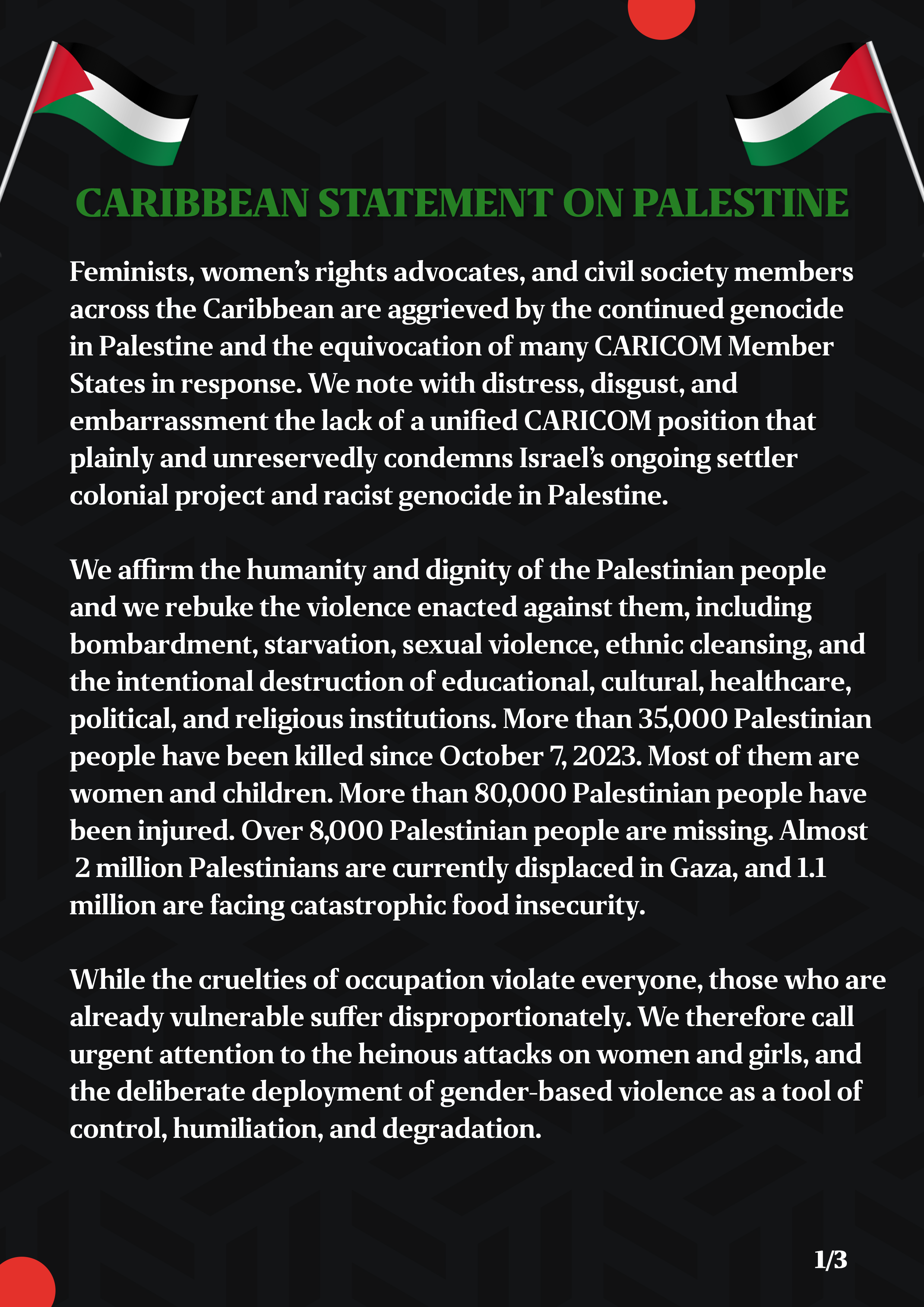
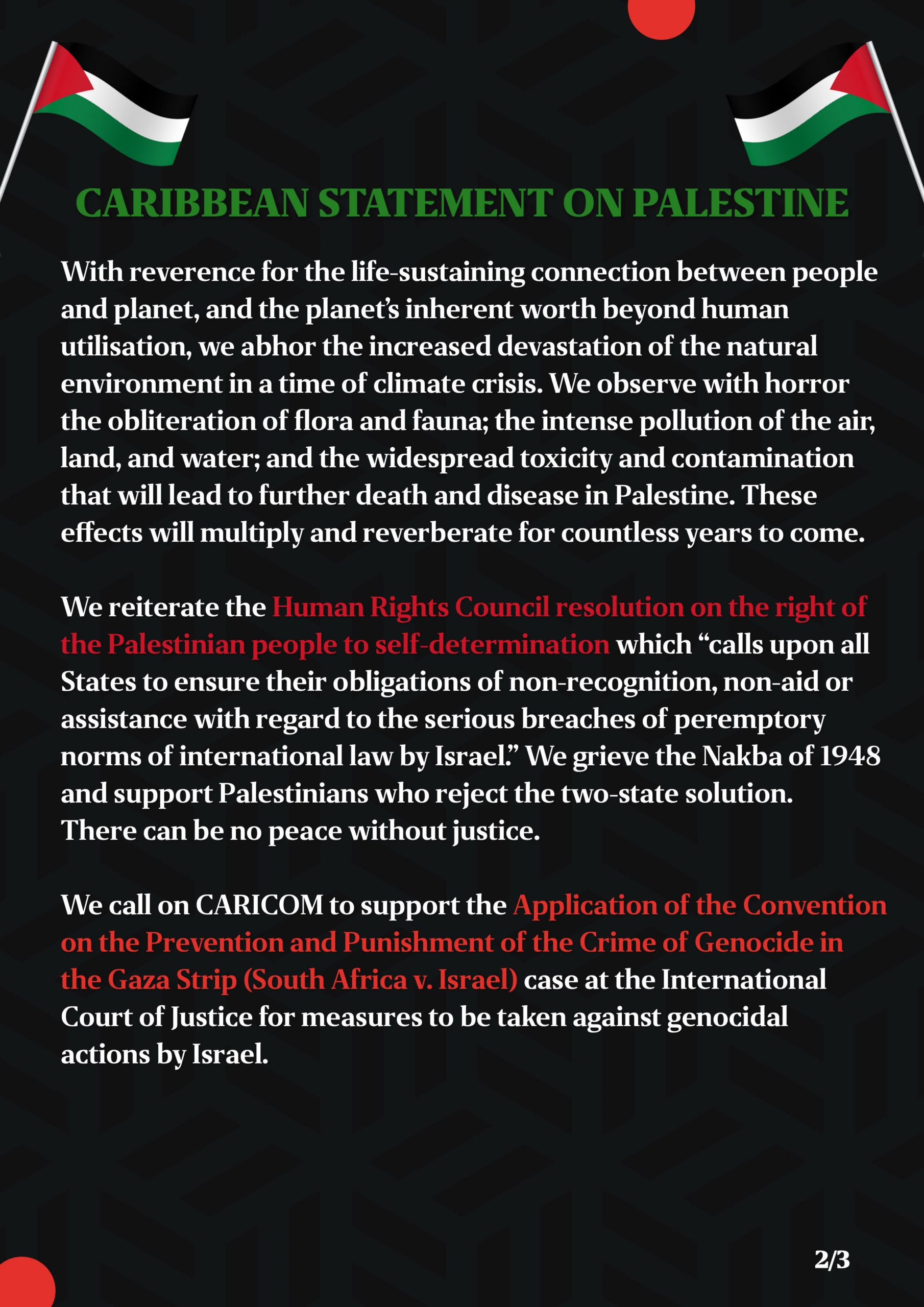
For more than two years, the genocide enacted against the Palestinian people by Israel has been broadcast to the world. Many have ignored the cries of Palestinian people who have been terrorised in every way possible: from denial of basic needs including housing, food, and water to experiencing tremendous loss to witnessing the destruction of their land and murder of their family members, friends, and community members. Many have somehow managed to believe that the genocide in Palestine is separate from the lives we live in other parts of the world. They think we have no part in violence inflicted. They do not see how easily we could be on the receiving end of the same violence, due in part to our refusal to rebuke it and withdraw our participation, however indirect.

There have been many signs that Palestine is being used as a testing ground. Oppressors are not only testing equipment and various kinds of technology, but international law and both the apathy and the resistance of people everywhere. Events in Venezuela and commentary by the US government on Greenland certainly give an indication of the far-reaching consequences of silence on violence and injustice inflicted on people, whether or not it is seen to be contained by borders.

“Empire never stops at one place. Gaza was the test. Greenland, Venezuela, Iran now loom as the victory’s bounty. [Is this the beginning – of a new world (dis)order?] What goes around comes around, and fools are those who didn’t see it coming,” Francesca Albanese recently posted on X.

UNRWA reported on January 20 that its headquarters in Al-Quds (referred to as East Jerusalem) was stormed early in the morning. “On January 14, Israeli forces stormed into an UNRWA health centre in East Jerusalem and ordered it to close,” they reported. “Water and power supplies to UNRWA facilities – including health and education buildings – are also scheduled to be cut in the coming weeks. This is a direct result of legislation passed by the Israeli parliament in December, which stepped up existing anti-UNRWA laws adopted in 2024.”

In addition, UNRWA said, “These actions, together with previous arson attacks and a large-scale disinformation campaign, fly in the face of the ruling in October by the International Court of Justice, which restated that Israel is obliged under international law to facilitate UNRWA’s operations, not hinder or prevent them. The court also stressed that Israel has no jurisdiction over East Jerusalem.”

United Nations experts, including independent experts on the promotion of a democratic and equitable international order:

Special Rapporteur (independent experts appointed by  the UN Human Rights Council) on adequate housing as a component of the right to an adequate standard of living, and on the right to non-discrimination in this context;

Special Rapporteur on contemporary forms of racism, racial discrimination, xenophobia and related intolerance;

Special Rapporteur on the human rights of internally displaced persons;

Special Rapporteur on the promotion and protection of human rights in the context of climate change;

Special Rapporteur on the right of everyone to the enjoyment of the highest attainable standard of physical and mental health;

Special Rapporteur on the right to food;

and Special Rapporteur on the situation of human rights in the Palestinian territory occupied since 1967 spoke out against the ban imposed by Israel against 37 organisations providing aid in Palestine.

“The ban is not an isolated act,” the experts said, “but part of a systematic assault on humanitarian operations in the occupied Palestinian territory and another step in the deliberate dismantling of Gaza’s lifeline.”

“Freedom is never voluntarily given by the oppressor. It must be demanded by the oppressed.”

Where, laws, policies, and courts fail, there must be people who stand together and raise their voices to speak truth and make clear demands for justice. This is not limited to protest signs and chants, petitions, or even organised acts of civil disobedience. It includes strategic decision making at the personal and community levels to affect the economy and, by extension, the ability of governments to fund war and genocide.

“The problems of racial injustice and economic injustice cannot be solved without a radical redistribution of political and economic power.”

While Martin Luther King Jr. spoke to the laws and policies that create and maintain such (concentrated) power, redistribution can and must include our own practices. The Palestinian-led Boycott, Divestment, Sanctions (BDS) movement calls on people everywhere to be intentional with our spending, refusing to give money to companies that support Israel in its genocidal action against Palestine and Palestinian people.

It requires that we break away from our habits of picking up the same products we always have, watching the same movies we always have, and keeping our money in the same banks and investment portfolios that we always have. It requires vigilance. It requires research. It requires a commitment to people, like us and not like us, and a set of shared values that include equality and justice, and that commitment must outweigh the exhaustion and laziness that capitalism levies against us. We have to push past inertia to take responsibility for everything that is in our power, making decisions that eliminate or reduce harm to others and move us toward a world of peace and equality.

“Our lives begin to end the day we become silent about things that matter.”

In a post on X, Bernice King invited people to remember her father by taking the following actions:

1. Amplifying and advocating for the end of state-sanctioned and facilitated violence against black and brown immigrants and against people, period.

2. Speaking up for people who are suffering genocide in Sudan, Palestine, Congo, and other nations.

3. Calling and writing your Congresspersons in support of democracy as opposed to dictatorship.

4. Supporting policies to eradicate poverty (higher minimum wage, affordable housing, etc)

5. Learning the truth about and challenging anti-black racism, which is still prevalent in healthcare, media, lending practices, the criminal “justice” system, etc.”

Recommendations

1. Join Feminist Book Club with Equality Bahamas and Poinciana Paper Press. This evening, Feminist Book Club is meeting at Poinciana Paper Press, 12 Parkgate Road, to discuss Theory and Practice by Michelle de Kretser. The selection for next month is P. Djèlí Clark’s Ring Shout, “a dark fantasy historical novella that gives a supernatural twist to the Ku Klux Klan’s reign of terror.” Ring Shout will be discussed on February 18 at 6pm. Register to join Feminist Book Club and receive updates at tiny.cc/fbc2026.

2. Exhibition openings at National Art Gallery of The Bahamas. On Thursday, January 22 at 6:30pm, What the Landscape Holds, an interactive exhibition by Jason Bennett of The Bahamas and David Gumbs of Saint-Martin, opens. It invites us to “step directly into constructed environments shaped by synthetic materials and technology, where everyday objects are transformed into immersive landscapes that can be touched, moved through, and activated by the viewer.” On the same evening, War Dog: Teeth, Thorns, and Iron, new works by Reagan Kemp opens in the Project Space. “Through painting and ceramic works, Kemp draws inspiration from Ajagunda, the warlike manifestation of the Yoruba orisha Obatala, reflecting on guardianship, survival, and the fragile line between defence and harm.”

3. Pot Luck: Cartoons from The Guardian and The Tribune of the 70s and 80s, featuring works by renowned artist and architect Eddie Minnis, opens at the National Art Gallery of The Bahamas on Friday, January 30 at 6:30pm. The exhibition includes a “vital body of editorial cartoons that captured the pulse of Bahamian life at a time when public discourse looked very different, yet feels strikingly familiar today.”

In a military operation, the United States abducted Venezuelan president Nicolás Maduro and his wife Cilia Flores from their home in Caracas. Maduro and Flores are now being held at the Metropolitan Detention Centre in Brooklyn, New York. They were taken to court on Monday, January 5. Maduro, when asked to confirm his identity, stated that he was kidnapped on January 3, and was cut off by the judge.

Discussions about the abduction and the subsequent statement by the US president about “running” Venezuela are going in many different directions. Some people, very unfortunately, believe it’s an attempt to bring stability to Venezuela, ignoring evidence to the contrary. Others believe it’s a move to control the oil. Still others see it going even further than oil, using it to inflate the value of the US dollar. Some point to the US fear of BRICS nations (Brazil, Russia, India, China, South Africa) and trade outside of the US.

This is certainly not about establishing a legitimate government in Venezuela.

There’s a tremendous amount of history to digest on the subject to fully understand what took place on January 3 and the path that not only Venezuela, but the world, is on. Venezuela has experienced economic booms and busts since the discovery of oil in the Maracaibo Basin in the 1920s.

In the 1970s, the oil embargo imposed by the Organisation of Arab Petroleum Exporting Countries (OPEC) on countries backing Israel, led to an exponential increase in oil prices and revenue in Venezuela. In 1976, President Carlos Andrés Pérez created Petróleos de Venezuela, S.A. (PDVSA), nationalising the oil industry and securing 60 percent equity in joint ventures.

Oil prices dropped in the 1980s, which significantly impacted the Venezuelan economy and led to a financial bailout by the International Monetary Fund (IMF). In 1998, Hugo Chávez became president and his decisions, including gutting PDVSA, led to a decline in the oil industry and the conditions for an authoritarian regime.

In 2007, the oil industry was partially nationalised, and foreign companies were required to partner with Venezuelan companies, which had to hold 50 percent ownership. Exxon sued for damages over nationalisation and Venezuela was ordered to pay $1.4 million. This was later annulled. Exxon resubmitted its claim and was awarded $76 million in 2023.

Maduro succeeded Chávez and maintained his position in 2018, in an election that was considered undemocratic. Economic sanctions were imposed by the US government in 2017.

In recent years, Venezuela has experienced a decline in oil production, increased debt, hyperinflation, and increasing autocracy. Within the last year, we have seen María Machado—previously funded to overthrow Chávez—dedicate her Nobel Peace Prize to the US president, attacks on Venezuelan boats, threats to the national security of Venezuela, and leveraging of Trinidad and Tobago’s land, sea, and airspace.

The abduction of the president of Venezuela is an act of imperialism.

It is an overreach of the United States, extending power over another territory through military force. The US is attempting to display and exercise dominance over a sovereign country—one that has independent power to govern itself. And Venezuela is not a standalone case. It is, in fact, emblematic of a nefarious ambition to control resources and people.

“Gaza exposed the hollowness of western universalism, liberalism and globalisation,” Middle East Eye’s Sami Al-Arian wrote. “Venezuela extends the lesson into the western hemisphere, with a clarity that even allies cannot easily obscure. When legality is enforced only against opponents, as Gaza and Venezuela show, it ceases to function as law and becomes an instrument of power. And when aggression is openly linked to oil, empire stops pretending to be anything else.”

In response to alleged human rights violations in Venezuela, the United Nations Human Rights Council established the Independent International Fact-Finding Mission on the Bolivarian Republic of Venezuela in September 2019.

Expert member of that mission, Alex Neve, was blunt in his assessment of the situation in the January 2026 report, titled “Venezuela: UN Fact-Finding Mission expresses grave concern following US military intervention and calls for accountability for human rights violations and crimes.

“The Maduro government’s longstanding record of grave human rights violations does not justify a US military intervention that breaches international law. Similarly, the illegality of the US attack does not in any way diminish the clear responsibility of Venezuelan officials, including Mr. Maduro, for years of repression and violence amounting to crimes against humanity. The Venezuelan people require and deserve solutions that fully comply with international law.”

The report expressed concern about the increased risk of human rights violations in Venezuela in the coming weeks, particularly as the United States government stated its intent to “run” Venezuela.

In a Facebook post on January 3, Menominee author, organiser, and educator Kelly Hayes was equally critical of the US government’s action, calling it a “fascist imperial power grab with implications for future foreign policy moves.” She noted that it’s also an indicator of the direction US democracy is taking. Hayes said the US president is acting out his fascist fantasies.

“We can hold compassion for the range of emotions Venezuelans may be experiencing — including positive emotions — and also be clear that regime change by a fascist superpower is dangerous, destabilising, and sets precedents that will not stop at Venezuela. Those aren’t contradictory positions,” she said.

Recognising the sovereignty of a country is not optional, regardless of the view anyone has of the way it governs itself. Foreign invasion does not bring great leadership. It’s for the people to rise up and stand together to create change. We need not see the Venezuelan case play out as the US intends, to understand that foreign invasion is dangerous and chaotic, negatively affects control of resources, prioritises extraction, and disproportionately impacts people in situations of vulnerability.

In her response to the January 3 press conference held by the US president, Venezuela-born campaign coordinator of CODEPINK Michelle Ellner made important points about the effects of war, sanctions, and military escalation.

“They fall hardest on women, children, the elderly, and the poor. They mean shortages of medicine and food, disrupted healthcare systems, rising maternal and infant mortality, and the daily stress of survival in a country forced to live under siege. They also mean preventable deaths, people who die not because of natural disaster or inevitability, but because access to care, electricity, transport, or medicine has been deliberately obstructed. Every escalation compounds existing harm and increases the likelihood of loss of life, civilian deaths that will be written off as collateral, even though they were foreseeable and avoidable.”

Ellner went on to challenge the assumptions made about the Venezuelan people: that they are and will be passive. With resistance, under circumstances like those created in recent days, comes a violence that is manufactured by oppressive forces, though often framed as unreasonable and caused by those who refuse to submit. The lack of unity in a country is not and cannot be a license for imposition by another.

“This moment demands political maturity, not purity tests,” Ellner said. “You can oppose Maduro and still oppose US aggression. You can want change and still reject foreign control. You can be angry, desperate, or hopeful, and still say no to being governed by another country.”

Do we live in a world where it is acceptable for one country to claim the right to control another?

What does it mean when a country can enact violence, operate outside of the law, and deem itself an authority on another country?

What are we called to do in the face of the genocide in Palestine and the imperialist threat to Venezuela?

“Power has displaced law, preference has replaced principle and force has been presented as virtue,” Howard University School of Law Professor Ziyad Motala wrote in Al Jazeera. “This is not the defence of the international order. It is its quiet execution. When a state kidnaps the law to justify kidnapping a leader, it does not uphold order. It advertises contempt for it.”

People are sharing opinions on this situation without sufficient information. It takes time and effort to access accurate information, process it, and come to a strong position. It’s easier—and irresponsible—to make assumptions based on headlines and snippets being passively shared on social media. In a Facebook post, Kelly Hayes reminded people that we need not make enemies of one another.

“The ignorance of folks who are flailing in their efforts to make sense of this moment does not make them the enemies[…] They are poor stand-ins for your actual enemies.”

This, of course, is not permission to shirk the responsibility to share information, challenge positions, and speak in support of human rights and the international laws that promote, protect, and uphold them.

It is a call to see the violent systems and the people who uphold them for exactly what they are, and to dismantle those systems in the interest of all.

We are at the end of 2025 and people are thinking about the year ahead and all that they would like to achieve. Goals and resolutions are being set, and improved lives are being envisioned. There is significant focus on the self and the family at this time. In a few weeks, there will be increased attention on the country and its fate as related to the next general election. Zooming out from our immediate lives and geographic location, the global swing to the political right comes into view. The consequences have been and continue to be far-reaching. While it does not receive the necessary attention, the uninterrupted genocide in Palestine is one of the most horrific failings of our time, certain to reverberate all over the world and for many years to come. The refusal to see the connection between our struggles and the interdependence of our liberation is certain to determine our future. 


Even after more than two years of feigning or enjoying ignorance, today is a good day to start paying attention. It is a good day to commit to the development of a political ideology that does not discount the lives or the land of people we see as different or distance from ourselves, but demands solidarity with all people in situations of vulnerability. Our survival depends on it, especially as capitalism becomes more acceptable to the masses for whom it is devastating.  


At the United Nations General Assembly in September 2025, Special Rapporteur on the situation of human rights in the Palestinian territories occupied since 1967 Francesca Albanese said, “As I argued in my last report to the Human Rights Council, this genocide has become profitable, unfortunately, not just for some corrupt private entities. And this is not only Israel’s crimes. This is the world’s crime sustained by silence, complicity, and the supply of funds, weapons, and political cover. History, we’ll remember, because it’s not that this is the first genocide that is been known. No, the Holocaust, the genocide in Bosnia, the genocide in Rwanda were also known to the people of the time. But this genocide happened because the world didn’t care enough to stop them, like today, or not. But today’s genocide is something different. It’s openly incited, cynically denied, and relentlessly supported, armed, and weaponized, while those who oppose it are silenced, beaten, criminalized, and smeared. This is why I say this is the shame of our time and the collapse of the international legal order in this moment, not only for the Palestinians, but for all of us.”


In an October 2025 address to the General Assembly from Cape Town, due to U.S. sanctions preventing her participation in New York, Albanese said, “International law is clear: States must neither aid nor assist in the internationally wrongful acts of others, and must prevent and punish international crimes. This requires immediately suspending all military, economic, and diplomatic ties with Israel until its crimes cease, and pursuing justice for the survivors by holding perpetrators and accomplices accountable.” 


To close the perceived distance between us the Palestinian people who are experiencing the genocide perpetrated by “Israel” and the Palestinian people in the diaspora, fiercely advocating to the lives and the land of their people, it is important to listen to their voices. Their stories are the truth we need to hear and feel. 


Nour ElAssy

“Since becoming a journalist, my life has unravelled in real time. Every time I have found a new place to stay, the bombs have found me again. The signal bars on my phone flicker like a dying heartbeat, and when the battery dies, which is often, I scramble – desperately searching for even a whisper of electricity just to send a photo, a sentence, a single update. Sometimes, I have to walk for kilometres through shattered neighborhoods to find a generator or a hotspot. All while airstrikes roar above me.


“But I keep going. I take testimonies from mothers standing beside the corpses of their children. From fathers who haven’t eaten in three days and have nothing to give their starving kids. From children who draw tanks instead of flowers. And I send them out to the world, praying someone, somewhere, will read them and feel what I feel[…] Every time I zip up my vest, I remember the face of the photographer who was burned alive. The videographer who lost his family while filming the ruins of another. This vest is not armour. It is a shroud. But I wear it anyway. Because my people need someone to tell the world what’s happening. Because silence is complicity. Because if we stop speaking, no one else will.” 


Omar Suleiman

“Thousands of children are dead. Thousands of children are under the rubble. Thousands of children are missing limbs. Thousands of children are missing parents. Thousands of children are fighting disease. Thousands of children are having surgeries performed on them without anesthesia. Thousands of children have been starved. Thousands of children have been bombed out of their homes. Every single child in Gaza has been forever traumatized. All of the above are war crimes. We can keep letting human rights organizations count them. Or we can finally hold them accountable.”


Sumayah Abu Qas

“Ousamah begged me to let him go there to get food, but I refused. I was afraid of losing him. In the end, I gave in to my daughters’ hunger. On the morning of 19 June 2025, Ousamah went to the aid distribution center by al-Bureij R.C. in the Netzarim compound with my brother Ahmad and some other friends.  That whole day, I was scared and anxious. Then, at 11:00 P.M., my brother came back with Ousamah’s body. He was covered in blood and dirt. Ahmad told us an Israeli tank had fired a shell at them and hit Ousamah in the back, killing him and five others while they were opening boxes of aid. They all died on the spot.” 


Ahmad al-Ghalban 

“We started packing up our things with my uncle Iyad Salem, 33, and his daughter Hibah, 6. Around 2:30 P.M., as we stepped into the street with our things, the army fired shells, and one hit us. I was seriously wounded. Muhammad was dying next to me, and my uncle Iyad was torn to pieces. Hibah, my mother, my sister Alaa, and my brother Qusai were about ten meters away. I lay on the ground, bleeding. I looked at my legs and couldn’t believe what I saw. I told myself, “This is a dream.” My mother screamed and called for help. Five minutes later, a man arrived, and when he saw we were still alive, he put Muhammad and me in a tuk-tuk and took us to the Indonesian Hospital, along with my uncle, my mother, and the others.


“On the way, Muhammad recited verses from the Quran and the Shahadatain prayers [recited before death], but I didn’t realize he was taking his last breaths. At the hospital, I was taken into surgery right away. It lasted four or five hours. When I woke up from the anesthesia, I found out they had amputated both my legs and four fingers on my left hand. My right hand was also broken, and they put a metal implant in it. I had shrapnel all over my body. I stayed in the ICU for five days.

“I didn’t know Muhammad had died. I kept asking about him, but my mother said he was hospitalized in critical condition at a-Shifaa Hospital. She was afraid to tell me because I was in a very fragile physical and mental state. I kept telling her, “I want to see Muhammad.” And every time I asked, “Why don’t you go visit him?” she said the doctors wouldn’t let her. After two weeks, when I was doing better emotionally, she told me Muhammad had died. I cried a lot because Muhammad was a friend, too. He was my twin brother. I couldn’t believe he was gone. I cried nonstop for five days. I never imagined I would lose him, or that I would lose both my legs.”

Abir Hamza El-Khawaja

“We used to have lives and dreams. Despite the fact the Gaza Strip has long been besieged, right now, it’s completely desolate. All that exists is destruction. It’s become apparent that our dreams may not come true, such as the ultimate dream of visiting Jerusalem, or Akka, for example. But beforehand, we were able to enjoy simple pleasures: We could go to work in the morning; we could eat our favorite food; and we could quietly read a book. We could enjoy watching the sunset over the vast sea, and people could play with their children. We could then return to our families at the end of each night and to a warm bed, where we could enjoy a favorite drink, in peace. This security disappeared from that moment, and it seems it’ll never return.


“In previous Israeli military assaults on the Gaza Strip, most people would stay in their homes. We were inevitably suffering from all the death, destruction and incessant bombing, but this time, it’s not like that. It’s annihilation, displacement and starvation. This time, they’re really taking our lives.” 


Noura Erakat

“As a Palestinian, my heart is very broken that a genocide can continue, that Palestinian babies can be slaughtered and there is a debate over whether or not that’s OK or how it should be done better. As a Palestinian, I’m so frustrated that rather than take aim at the oppressive systems that placed us in these conditions, like prolonged military occupation, apartheid and genocide, that we are made into a problem to be resolved. We are not the problem. These conditions that oppress us are the problem and should be what the international community targets to destroy, rather than allowing us to be the target of destruction.”


Diana Safieh

“How do we handle this [survivor’s] guilt? Some struggle and do nothing, while others, occupied with their own struggles, cannot engage. However, many of us feel compelled to do what we can for those who cannot. Our activism is driven by the belief that our survival obliges us to fight for justice and the rights of those in Palestine. This constructive action is crucial for our own survival. And many of us, at home and abroad, seek comfort in those non-Palestinians offering their solidarity, through kind words, marches and other forms of activism. 


“I do not want to end on a pious note, and yet I will. It is one’s duty to take advantage of all the opportunities life presents to you to make the world a more hospitable place for all of us[…] We must use our privilege to work toward a day when life, liberty and the pursuit of happiness will be afforded to us all.”


Act to End the Genocide

Boycott, divest, and sanction. This is what we, who support human rights, abhor violence, and work for liberation, are called to do. It is as wrong as it is easy and lazy to assume a position of powerlessness. We can choose to seek information and use it to make decisions that, at the very least, minimize harm. The BDS movement is growing, and the organizers are providing easily accessible information to help participants to avoid giving money to “Israel” and entities that support it. Google, Amazon, AirBnB, and Disney+ are among the companies targeted by the economic boycott. More information is available at bdsmovement.net/campaigns#2. Make 2026 the year that you spend as if the lives of others depend on it. They do. 

Established by the Human Rights Council on May, 27, 2021, Independent International Commission of Inquiry on the occupied Palestinian territory, including East Jerusalem, and Israel (the Commission) collected and analysed evidence related to the occupied Palestinian territory and alleged violations of international law. Its report, “Legal analysis of the conduct of Israel in Gaza pursuant to the Convention on the Prevention and Punishment of the Crime of Genocide: Conference room paper of the Independent International Commission of Inquiry on the Occupied Palestinian Territory, including East Jerusalem, and Israel”, was published last week.

This is not the first report by the Commission. Previous reports “found that the Israeli security forces have committed crimes against humanity and war crimes in Gaza, including extermination, torture, rape, sexual violence and other inhumane acts, inhuman treatment, forcible transfer, persecution based on gender and starvation as a method of warfare”. It was also found that Israel “destroyed in part the reproductive capacity of the Palestinians in Gaza as a group, including by imposing measures intended to prevent births” and “deliberately inflicted conditions of life calculated to bring about the physical destruction of Palestinians as a group”.

The report notes that when a genocidal act is committed, there is a duty to punish the act. It references the Genocide Convention and the Rome Statute of the International Criminal Court, both of which define genocide. “The Rome Statute that established the International Criminal Court gives that Court jurisdiction to prosecute and punish individuals for the crime of genocide if committed on the territory of a State Party, regardless of the nationality of the perpetrator, or by a national of a State Party, wherever committed.”

The five categories of genocide, as laid out in the Genocide Convention and the Rome Statute are killing members of the group, causing serious bodily or mental harm to members of the group, inflicting conditions to cause physical destruction of the group, in part or whole, imposing measures to prevent birth within the group, and transferring children of the group to another group by force “with intent to destroy, in whole or in part, a national, ethnical, racial or religious group”.

The reports noted that at least 47 percent of Palestinians killed in Gaza since October 7, 2023 were women and children. It also found that 83 percent of Palestinians killed in Gaza were civilians. The World Health Organization (WHO) reported 498 attacks on healthcare facilities, killing 747 people in the Gaza Strip. It was found that women and children were specifically targeted and killed by Israel. “In all cases analysed by the Commission in relation to the attacks along the evacuation routes and within designated safe areas, the Commission found that the Israeli security forces had clear knowledge of the presence of Palestinian civilians along the evacuation routes and within the safe areas but nevertheless they shot at and killed civilians, some of whom (including children) 52 were holding makeshift white flags.”

The Commission reported on deaths resulting from the blockade on humanitarian aid, the increase in maternal mortality and neonatal and intrapartum deaths, and at least 1,373 people being killed while trying to access food. It stated, “Palestinians in Gaza were attacked in their homes, at hospitals, in shelters (including schools and religious sites), during the evacuations and in designated safe zones. At times, civilians, journalists, healthcare professionals, humanitarian workers and other protected persons were directly targeted and killed.”

The details in the report are damning and there could only be one conclusion. It concluded that “the Israeli authorities have committed the crime against humanity of extermination in the Gaza Strip by killing Palestinian civilians”. It stated that “the Israeli authorities intended to kill as many Palestinians as possible through its military operations in Gaza since 7 October 2023 and knew that the means and methods of warfare employed would cause mass deaths of Palestinians, including children”.

On page 16 of the 72-page report, it says, “The Commission concludes that the actus reus and mens rea of ‘killing members of the group’ under article II(a) of the Genocide Convention are established.”

The full report is available online, searchable by its title. It give a clear account of what has been taking place in Palestine and the irreparable harm caused to the Palestinian people. In the face of genocide, it is absurd that there continue to be calls for a two-state solution by anyone who is not Palestinian. Tremendous reparations are owed to Palestine and the Palestinian people, and it will take generations to repair the damage done to the land and the people.

As Rabea Eghbariah wrote for The Guardian: “The two-state solution has not only become detached from reality, but for too long steered the discussion away from reality itself[…] Just last month, Israel approved a plan for 22 new settlements in the West Bank. These decades of settlement expansion and de facto annexation have effectively gutted any viable basis for the two-state paradigm, even according to its own metrics.”

Eghbariah added: “The truth is that the two-state solution has become a delusion – a mantra repeated to mask an entrenched one-state reality[…] This mantra continues to prop up the illusion that Israeli occupation is on the brink of ending – if only more states recognize the Palestinian state and if only Palestinians and Israelis would just sit down and talk.”

Eghbariah clearly states that the two-state solution is fantasy and misdiagnosis. It ignores the foundation of what we see happening today, which is not a crisis, but a genocide. That foundation is the Nakba of 1948 and continued destruction of Palestine and displacement of the Palestinian people. There are questions that begin with the Nakba, including and not limited to its legal implications. The fantasy of the two-state solution comes from the idea that the “two sides” need only talk and come to an agreement, never having to reckon with the history of violence inflicted upon the Palestinian people and the justice due to them.

Opinio Juris shared commentary, in response to States recently recognising the State of Palestine, by scholars. Below are four excerpts.

“While two-state solution pontification is presented as pragmatism, it functions as a form of necropolitics, whereby one has power to dictate who is worthy of living. Salaita demonstrates that, when zionism is given oxygen to live, Palestinians are, by necessity, awarded the death penalty. Zionism can only thrive on the ruins of Palestinian villages and through the eradication of Palestinian natives, from the 1948 Nakba until the genocide of Gaza.”

– Bana Abu-Zulu

“Most obviously, the space between recognitions of the State of Palestine and the reality of Palestinian devastation, genocide, and catastrophe is so gaping as to swallow any declarations whole. It took declared famine for the recognising governments to speak at all; it is hard to imagine what would be needed to make them act. “

– Zinaida Miller

“As a child, I wondered why Europe didn’t see us and I would have been elated with this week’s declarations. As an adult, I understand that Europe still does not see us for us, but seeks to absolve itself of the guilt of having helped Israel’s extermination campaign. However, as a Palestinian, I know that our survival, resistance, and will to live provide all the recognition we ever needed.”

– Nawal Hend

“How can a state recognise Palestine without calling out Zionism for what it is? The two are clearly incongruous. A sincere recognition would entail all of the following: a) the creation of a multilateral conference for the consolidation and drawing of definitive boundaries of a Palestinian state; b) the establishment of an immediate peace-keeping mission for the inviolability of said borders and safety of its people; c) the imposition of intolerable sanctions on Israel and its isolation until at the very least the genocidal elements in its government are removed and meaningful relations with the new Palestine entity are restored; d) provision of unequivocal support to the International Criminal Court in its pursuit of justice; e) restoration of the life and dignity of the Palestinian people, both in Palestine proper and its diaspora.”

– Ilias Banters

The genocide is not deniable. It is happening, and it is being documented in realtime. The photos and videos give us imagery and the voices of the people reporting and sharing their stories give us limited insight into the way it feels to live through aggression, destruction, and murder. Palestine may seem geographically distant, but our struggles are connected. Colonialism, racism, and capitalism are known to us too. The Boycott, Divestment, Sanctions (BDS) movement needs more attention and greater, more dedicated participation. Visit bdsmovement.net to see the list of targets. Make the decision to stop spending money with corporations that fund the genocide. Stop enabling Israel. Stand with the Palestinian people.

Published in The Tribune on September 24, 2025

While Leslie Miller’s misogynistic, infantilising reference to Senator Michela Barnett-Ellis is not at all surprising, given his many public episodes, it has drawn attention to the longstanding issue of discrimination against women in political and public life.

The idea that women are inferior and must be relegated to the private sphere and men are superior and entitled to the public sphere persists well beyond the time that one income was sufficient and (some) women’s only work was in the home and in service to the family (which was never the case for black women).

That patriarchal arrangement was in service to capitalism, even more than it was for men, as women made (and still make) it possible for men to work through the provision of various unpaid services including the maintenance of the home and the people living in it and the reproduction of labourers.

Patriarchy created a hierarchy and it has required us to live according to this division, even after the point that women entered the public sphere and, as a matter of necessity, started to work for wages. Patriarchy assigned values and expectations based on gender and while the economic realities have changed and society along with it, patriarchy has its devotees.

Just as patriarchy separated women and men into the private and public spheres, it instilled the belief that men are to be leaders and decision-makers while women are to follow and submit.

Misogyny extends beyond the hatred of women to the hatred of all that is feminine. As emotions are viewed in a binary way, considered feminine or masculine, certain emotions are reserved for women and restricted for men.

On the basis of these socially constructed rules, it was determined that women are too “soft” and “emotional” for leadership, even as men regularly perform anger to the detriment of the people expected to follow them.

Women have worked, for generations, to gain access to opportunities to work and to lead through consistent efforts including, but not limited to, higher education. Today, men regularly attempt to use the level of education many women have attained, and subsequent professional success, as evidence that gender inequality does not exist.

They refuse to see the persisting issues including sexual harassment in the workplace, the gender wage gap, and the impediments to participating in frontline politics and public life.

Miller’s misogynistic comment is evidence of the discrimination that still exists and is not only an annoyance, but a barrier to equal participation and, ultimately, the representation of women in leadership at the level that is proportionate to the population. It also highlights the issue of intersecting forms of discrimination that women face.

A women vying for candidacy or for a seat in Parliament are not only unfairly judged rather than appropriately assessed because of their gender, but because of their (perceived) age, class, and other identities. Women are expected to be deferential and young people are expected to be deferential. Young women are expected to be doubly deferential should they even dare to be in the same space as men.

It is an embarrassment that only 18 percent of parliamentarians are women. No government administration has ever addressed this issue by instituting a political quota. Perhaps even worse, no political party has chosen to take the lead in addressing this issue, demonstrating commitment to achieving gender equality by instituting a quota at the party level.

This is clear evidence of the priorities and the cowardice of political parties. Temporary special measures such as political quotas have been recommended to The Bahamas on numerous occasions through international human rights mechanisms in which The Bahamas voluntarily participates.

International Covenant on Civil and Political Rights, in Article 3, obligates States to “ensure the equal right of men and women to the enjoyment of all civil and political rights set forth in the present Covenant.”.

Importantly, Article 25 states, “Every citizen shall have the right and the opportunity[…] to take part in the conduct of public affairs, directly or through freely chosen representatives [and] to vote and to be elected at genuine periodic elections which shall be by universal and equal suffrage and shall be held by secret ballot, guaranteeing the free expression of the will of the electors.”

Inter-American Convention on the Prevention, Punishment and Eradication of Violence against Women (Convention of Belem Do Para) states in Article 4 that “Every woman has the right to the recognition, enjoyment, exercise and protection of all human rights and freedoms embodied in regional and international human rights instruments. These rights include, among others[…] The right to have equal access to the public service of her country and to take part in the conduct of public affairs, including decision-making”.

It continues, in Article 5, “Every woman is entitled to the free and full exercise of her civil, political, economic, social and cultural rights, and may rely on the full protection of those rights as embodied in regional and international instruments on human rights. The States Parties recognise that violence against women prevents and nullifies the exercise of these rights.”

The Sustainable Development Goals were adopted in 2015, and goal five on gender equality includes “ensure women’s full and effective participation and equal opportunities for leadership at all levels of decision-making in political, economic and public life” as a target. The indicators are the proportion of seats held by women in national parliaments and local government and the proportion of women in managerial positions.

The Convention on the Elimination of All Forms of Discrimination against Women (CEDAW), also known as the bill of women’s rights, was ratified by The Bahamas in 1993—acknowledgement discrimination against women as a violation of women’s human rights and a commitment to take the necessary steps to come into compliance with the Convention in order to end discrimination against women.

Article 7 of the Convention calls on States to “take all appropriate measures to eliminate discrimination against women in the political and public life of the country and, in particular, shall ensure to women, on equal terms with men, the right[…] to be eligible for election to all publicly elected bodies [and] to participate in the formulation of government policy and the implementation thereof and to hold public office and perform all public functions at all levels of government.”

As CEDAW was adopted in 1979 and entered into force in 1981, there issues that have emerged and knowledge that has since been created that are not explicitly stated in the Convention. To ensure that it can carry out its mandate and respond to the realities on the ground with its collective human rights expertise, the CEDAW Committee produces General Recommendations which expand upon Articles of the Convention, address areas of concern, and guide States in their reporting.

There are General Recommendations, for example, on violence against women, older women and protection of their human rights, rights of rural women, and gender-related dimensions of disaster risk reduction in the context of climate change. In 2024, the CEDAW Committee produced General Recommendation 40 on equal and inclusive representation of women in decision-making systems. It begins, “Women have the right to equal and inclusive representation in all decision-making systems on equal terms with men[…] This right is still not respected. This also seriously hampers implementation of all other rights under the CEDAW Convention.”

General Recommendation 40 was produced as a comprehensive guide for States “on achieving equal and inclusive representation of women in all decision-making systems across all sectors, aiming for a systemic change”.

It recognises seven pillars of equal and inclusive representation of women in decision-making systems, recognising “patriarchal structures impede women’s equal and inclusive representation in decision-making systems” and the need for a transformational approach that dismantles those structures. The pillars are:

1. 50:50 parity between women and men as a starting point and universal norm;

2. Effective youth leadership conditioned by parity;

3. Intersectionality and inclusion of women in all their diversity in decision-making systems;

4. A comprehensive approach to decision-making systems across spheres;

5. Women’s equal power and influence in decision-making systems;

6. Structural transformation for equal and inclusive decision-making;

7. Civil society representation in decision-making systems.

General Recommendation 40 is available online. It described all seven pillars and not only sets on the obligations of States, but provides guidance for meeting the obligations. Its recommendations include legal amendments to institutionalize 50:50 parity between women and men in all spheres of decision-making, adoption of a parity strategy, provision of education on temporary and permanent special measures, implementation of awareness-raising campaigns toward positive discourse on parity, cooperation with media to condemn, monitor and ensure accountability for sexism and misogyny, and prevention and prosecution of hate speech in decision-making and against women candidates.

All candidates, representatives, leaders, and members of political parties should read the document and contribute to moving The Bahamas toward compliance through all means available to them.

Published in The Tribune on September 10, 2025

After seeing Entou Pearl Springer’s “Freedom Morning Come” on Emancipation Day in Trinidad, I posed its central question to people I know through friendships, scholarship, and activism. What you gonna do with your freedom? Everyone was intrigued by the question, where it came from, and where it would take them as they explored it. It seemed to be clear to every person I asked that there is no simple answer to the question. It is received with the weight of responsibility that is difficult to ignore. The question itself imposes a directive of sorts, and it is for us to determine what we are called to do with the freedom we have today. This week, I am sharing more of the responses I received to the question.

Freedom, privilege, and responsibility

One respondent pointed to the privilege that is inherent in certain versions freedom, and the fact that there is a division between people with varying degrees of freedom and privilege that leads people to act only in their own best interest, ignoring the plights of others.

They said: “A privilege that may come with freedom is the ability to turn your head away from other people, but true freedom comes with knowing that what you do in community matters. Colonisers used their freedom to oppress others to get more, but true freedom comes with responsibility to others, lifting each other up.”

Freedom to experience pleasure

Reflecting on this reality and their own freedom, they added, “I am using freedom to live my life with as much authenticity as possible—to love, to experience joy and pleasure, and to exist, even in the same space as bigotry and deliberate misinterpretation and abuse of the Word of God and abuse of other people. I am living with the determination to discover and harness pleasure and not apologise for it. I demand the freedom to exist within this duality and not expecting it to come with shame or an ax to drop at any moment. The freedom to see a slow-falling ax and still live as though it will never drop.”

Dawn Demeritte shared that she sees freedom as “a blessing to be able to do things that [her] ancestors had to fight to do”. She said: “I absolutely do not give in to capitalism if I can help it.”

Freedom, to Ms. Demeritte, is a way of life. She said: “When I wake up every morning, instead of rushing to get into the grind, I have a slow morning. I move at a ridiculously slow pace. I read a chapter of a book, I drink my herbal blend or matcha, I do my spiritual work, sometimes I sit on the balcony and just enjoy nature and then I slowly start my day. I rest when my body tells me to. I make time for joy, constantly filling the cup of my inner child. I let my senses guide my day.”

This is, of course, far from the reality of many. The freedom most of us have now is not absolutely or limitless, and it takes strategy, commitment, and specific action to build a life within which freedom can take this shape. There are still the everyday demands that come with living here, under the existing circumstances and with the specific needs and desires we have.

“I don’t restrict myself to certain experiences because that’s how it’s always been done. What’s good for a white person is good enough for me too. Don’t get me wrong I have responsibilities but I don’t let capitalism tell me how to live my life. I rest like it’s my birthright because it is. I work but when I’ve been sitting down for too long I close up and I go and live my life because I only have one shot to do it,” Ms Demeritte said.

Education as a path to freedom

Living as though we are free is a skill we need to build. It is one we have to practice. Freedom and lives of freedom look and feel differently from one person to another. We do not have all the same dreams. We do not all have the same responsibilities. There are places where our dreams and responsibilities intersect, giving us opportunities to work together, and there are places where we need to create what we want. This becomes more difficult as we get older and learn the ways of the world in rigid ways, believing they cannot change. It is important that children are equipped with the tools to imagine, to create, and to use their skills and ideas for themselves and one another.

Shara Goldsmith said: “With my freedom, I create diverse and equitable spaces where all children are respected, valued, and protected. With my freedom I advocate for the transformation of education and mental health institutions into holistic spaces of compassion and dignity. I am free, and so, I carve a path of acceptance, safety, and belonging, upon which others may trod together in community. With my freedom, I cultivate a life of purpose, peace, and play.”

Freedom to create change

As we gain greater access to education beyond the classroom, we receive information that is not a part of the national programming of citizens. It becomes more clear to us that the school curriculum is insufficient preparation for life anywhere, especially if we intend to do anything more than be cogs in the wheels of capitalism and colonialism. While everyone does not have the time and energy to challenge systems of inequality, there are people who are making intentional decisions in their study, work, and social networking to understand the world we are in what it takes to change it.

Ashawnté Russell said: “With my freedom, I’m fighting for justice, and not only the kind that lives in history books but the kind we must still claim today. I use it to push for climate justice in a world where those least responsible for the crisis bear the heaviest burdens. My freedom allows me to raise my voice for not just The Bahamas but the Caribbean, for the young end young at heart, for islands on the frontlines, for the communities whose struggles are too often ignored.”

“I walk in the footsteps of ancestors who couldn’t speak freely or with conviction,” she continued. “Now I sit at tables, organise across borders, and demand action from governments and global leaders. My freedom fuels this work, not just as a right I’ve inherited but as a responsibility I carry. True emancipation means not just surviving systems of oppression, but transforming them.”

Amber Turner said, “I am using my freedom to challenge systems that continue to deny freedom to others. Freedom, to me, is not just the absence of chains, but the presence of access to clean air, safe water, stable land, and a future you can plan for. I have committed my freedom to climate work, because the same colonial-era exploitation used to justify slavery is alive today in the exploitation of people and ecosystems.”

“I conduct research, communicate, and advocate for policies that address the needs of communities most affected by the climate crisis and who have contributed the least to it. I use my freedom to amplify the voices of those still fighting for theirs including marginalised youth, whose lives are impacted by environmental precarity. What am I doing with my freedom? I’m trying to make sure it’s not just mine,” Ms. Turner said.

Aneesah Abdullah said, “With my freedom, I will continue working to ensure that the rights, dignity, and voices of those on the margins—particularly religious minorities and underrepresented communities in The Bahamas (and on an international level). To the degree possible, I hope to continue to use my freedom to create/support the creation of space for all to be able to fully realize their human rights.”

Freedom to forge new paths

The freedom of our ancestors who were enslaved is different from the freedom we have now, and this means that we can and must use ours in new ways. Every generation has had to face daily challenges, look to the work of people before them for guidance, and envision a better, more equitable world. Every step forward requires acknowledgement of the past, respect for the people who struggled before and for us, and understanding the tactics used.

Tanicia Pratt said: “I’ve been using my freedom to connect with my ancestors, and do what they couldn’t. I don’t deny myself rest, joy, and self-expression. I dream about the world I want to live in and find ways of making that a small possibility now.”

Marjahn Finlayson said: “I’d go far as I can. See all I can see. My freedom looks different from my ancestors, but I’m building on the foundation that they laid out. Freedom from oppression in the form of slavery and physical labour to oppression in the form of white supremacist patriarchal capitalism. If I was free from the system, I would rest on the beach. I would teach.”

In the context that we live in, I imagine how it feels to fly while climbing a mountain,” Ms Finalyson continued. “Trying to live without fear and accepting consequences as they come when I do the right thing in my heart. The circumstances have changed but hundreds of years later, when I think about my enslaved ancestors, I think about prominent movements and leaders. Freedom comes from freeing others and ourselves.”

Published in The Tribune on August 13, 2025.

What you gonna do with your freedom? This is the question posed by Freedom Morning Come, a play by Entou Pearl Springer, performed in front of the Treasury Building in Port of Spain on the morning of August 1—Emancipation Day in Trinidad.

In the early hours of Emancipation morning, scores of people gathered to see the play. Freedom Morning Come is a play that depicts the day that enslaved people received the news that they were to be freed. The characters bore the names of enslaved people and told stories of capture, unsafe voyage, suicide, enslavement, violence, grief, and longing for both home and family. They began to look forward, imagining what life as free people would look and feel like. “What you gonna do with your freedom?” they asked one another, and the responses varied. At the end of the play, the question was posed to us, the audience, supposedly free.

This week, I shared this question with several people, inviting them to share their answers with me and with you. I found that people think of freedom in many different ways. Some focus on the freedom of today and making the most of it, some see that the freedom we currently have is still limited, some are acutely aware of the absence of freedom for others, and some think deeply about the duty they have to use their freedom for the benefit of other people.

Freedom realised

It is easy to take our freedom, however we view it, for granted. In asking people what they are going to do with their freedom, I have been exposed to the ways that some people are living in their freedom now and reveling in the ability to make decisions for themselves.

Here is what Myra M McPhee shared:

“What I have done with my freedom is such a profound question because of the nuanced nature of the definition of the word.

“Today, I am the freest I’ve ever been. I have a home, I am healthy, and I am loved by family and friends. I have the kind of freedom that allows me to travel whenever and wherever, I can schedule my annual doctor appointments a year in advance and schedule same-day virtual appointments, and I play Bahamian Citizenship Test games on Twitter with other Bahamians during business hours. I advocate for myself at work. I scream on behalf of others against systemic discriminatory laws. I create art. I am free free.

“My grandmother didn’t have the opportunity to go past the 6th grade and raised 12 children on John Street. My mother, a very smart woman with numbers and long-term planning, wasn’t able to go to college after her 12th grade year at Aquinas. Then there is me. I’ve earned 1 bachelor’s degree, 2 master’s degrees, and other academic accolades. My dreams and goals have not been limited. They have been fueled by my freedom and the sacrifices of the women in my family. I am free because my elders did way too much with way too little.

“I have the freedom of choice, comfort, and convenience. So with my freedom I choose to visit Nassau multiple times a year, I choose to be an artist and an administrator, I choose not to be stressed or hopeless. I am the kind of free that is committed to not missing birthdays, Mother’s days, or other special occasions. I am free to be present at the important moments.

“My grandmother and mother did the impossible with their limited freedom. With my boundless freedom, I choose to live a life the way I want. My existence is political, and yet I still thrive, because I cling to my freedom. It is a precious gift that I cherish every day.”

Freedom awareness

Do you have awareness, every single day, of your freedom? Some people are working to remember, to know, to act on their freedom on a daily basis, while trying to remind others of their own freedom.

“I have been using my freedom by trying to remember everyday that I actually have it. Some days, I feel like I am responsible to alert others to their own freedom and ensuring them access, but then most days that feels ridiculously self-important. I think I just have to make sure that I keep using mine. That I wring it out so that anyone watching can use it as an example if they desire,” said Niambi Hall Campbell Dean, PhD.

Can freedom and inequality coexist?

For some, it is difficult to contend with the idea of freedom while experiencing and witnessing various forms of inequality.

EW said: “I’ve been wrestling with the question of freedom a lot recently, especially regarding gender inequality. As a young Bahamian, it has often felt difficult— almost contradictory— to respect and appreciate the sacrifices our ancestors made for us to get to where we are today, while acknowledging and understanding that we still have a ways to go. Emancipation Day, among other holidays such as Independence Day, is a reminder that we did not always enjoy the liberties, rights, and freedoms that we at times take for granted today. It’s also a reminder of the power of people to join together, despite our differences, and achieve a common goal— one that realises better outcomes and conditions for those facing discrimination and oppression.”

“These observances should inspire us to fight complacency and discouragement and encourage us to channel our predecessors’ determination to make the changes we would like to see for ourselves and those who will come after us,” she continued. “On this Emancipation Day, I will take the time to reflect on the importance of collective action and justice and express my gratitude for those who made sacrifices for our freedom.”

Are we free while others are not?

By now, we are all aware of the settler colonialism, extractivism, and genocide that are constraining and erasing the freedom of people, and people themselves, all over the world. Anyone who is awake to these ongoing horrors and the failure of the international community to take action to stop them must think of those horrors when conversations about freedom arise.

“Free Congo. Free Haiti. Free Sudan. Free Palestine,” Orchid Burnside said.

Freedom as a tool to help others

Even for those who acknowledge that there is still a long way to go in experiencing and inhabiting freedom, there are ways to leverage the freedom we do have to support other people and to build a better world.

Kendria Percentie-Ferguson said: “With my freedom, I’ve chosen to serve. I use my voice and skills to advocate for justice, climate resilience, and equity, especially for communities that are often overlooked. To me, freedom means purpose. It’s choosing work that centers the vulnerable, challenges systems, and uplifts others. I’m still growing, still healing, but I try to use my freedom with intention every day.”

Dr Ancilleno Davis of @SciPerspective said: “I give others freedom. Through Science and Perspective, I teach youth and Bahamian communities how to use science to build their own body of knowledge so that they can in turn make the decisions their communities need. When information, science, education and choices are gatekept, it constricts the freedom of people. When we allow those affected by the choice the opportunity to learn what choices are being made, see and become involved in the processes used to make those decisions, and review the decisions before they are cemented, we strengthen the freedoms and the society we participate in.”

Is there freedom where there is no choice?

There is a freedom from and there is freedom to. One does not necessarily guarantee the other. A function of freedom is the ability to make a choice on one’s own, and true choice comes from the availability of options. There are ways that freedom may not be fully enjoyed due to the constraints of day-to-day responsibilities shouldered by individuals and groups that do not have the support of systems and resources that would enable them to exercise more free will.

When asked what they would do with their freedom, a person who will remain anonymous said, “Nothing, not a single thing. To me freedom is the power to choose from a place of want/desire and not need. As I sit here in an airport dreading my return to navigating adult diapers and incessant emails, only answer I got is nothing. I am going to do nothing with my freedom.”

What you gonna do with your freedom?

What about you? What you gonna do with your freedom? What have you done with it until now? If you would like to contribute to the responses that will be shared next week, send yours to shesubscribestostuff@gmail.com.


Published in The Tribune on August 6, 2025.