In The Bahamas, the commitment to and practice of respectability politics continues to outweigh common sense, human decency, and care for one another. It shows up in so many spaces and has been accepted as “normal” and “proper” for so long that it is rarely questioned, even when it causes obvious harm.

Respectability politics, at one time, was a survival tactic. People in situations of vulnerability, who were marginalised, and who were at risk of violence and discrimination did all they could to blend in by conforming to mainstream “standards” that were, ultimately, those set by white and wealthy people. Black people tried to match their appearance and behaviour with that of white people in the attempt to either go unnoticed or be seen as exceptional, thereby escaping, to some extent, discrimination.

Racism is still rampant today. Classism is still a part of our reality. The survival tactics of one generation are passed down and imposed upon the next. It can be difficult to see the historical context of our practices when they are not discussed, but carried out as a matter of duty, fulfilling expectations, and become norms. For this reason, respectability politics can, in its current practice, appear to be about morals or manners rather than a tactic that was useful (to a limited extent) and is now counterproductive, harmful, and anti-black.

It was not long ago that black women who kept their hair natural, meaning it was not chemically straightened, were strongly discouraged, told that it was unprofessional. People insisted that it did not look neat when, really, it simply was not straight and did not have the properties of straight hair. At a certain point, it was fine to have natural hair if it could be made to look like it was not. This was not about neatness. It was racism. It was the oppression that accompanies the idea that blackness is shameful and that black people aspire to be as close to whiteness as possible. We have seen and heard new stories about people being dismissed from work and school for having afros or locs. Those days, evidently, are not over.

“They came to school looking like hoodlums,” a social media post by RM Bailey said. The school, dissatisfied with their length of hair, decided to take a set of boys to a barber for haircuts. They declared them “beautiful” after the haircuts were provided. The school, mandated to provide education to all enrolled children, removed these children from their classes, took and posted photographs of them, likely without the consent of their parents/guardians, and made a disgusting, disparaging comment about them.

“Hoodlum” is a term that refers to a violent criminal. This is a completely inappropriate term to use to describe any child, especially based on the length of the hair or style of their haircuts. Removing the post is not enough. The boys are owed an apology, both for denigration in the social media post and the violation of their bodily autonomy. RM Bailey, unfortunately, is not alone in this anti-Black racism that has been internalised and unleashed on children in the form of certain rules and they ways they are enforced.

CC Sweeting reportedly kept out of classes when their haircuts were deemed unacceptable. The involved adults, and likely all administrators and educators, need specialised training to give them culturally relevant information on anti-black racism, stereotyping, implicit bias, and microaggressions and support them in developing appropriate rules, regulations, and application principles.

Schools have rules and regulations. Of course. Schools have uniforms. Yes. Schools attempt to set a standard through their rules and regulations. This does not mean the rules and regulations should remain as they have been for years, and it does not mean they are being applied and enforced in appropriate ways, particularly for the education, growth, and full development of this generation.

White boys are not made to keep their hair as short as black boys. For this, there is no reason. There is a root, and it is anti-black racism. It is due to the normalisation and continuation of respectability politics that people continue to practice. From the chemical straightening of black hair and the amount of gel used to manipulate the texture and volume of black hair to achieve a ponytail that looks slick and flat from the front, these practices can be stylistic and personal choices, yet should be considered by those who engage in them. These practices absolutely should not be expected or required of anyone.

Recently, there was lively conversation about a social media post by a business that is refusing service to people wearing bonnets. It is reasonable that a person may wear a bonnet, whether protect their hair, to preserve a hairstyle, to cover hair that is not styled to their liking, or as an accessory one simply likes. It does not need to suit anyone else. No one else needs to applaud the act. It is okay to dislike someone else’s appearance. It is not okay, however, to police the bodies of other people.

It is one thing for a business to refuse service to customers and forgo the related revenue from them and the people who decide not to spend money there as a matter of principle, and it is an entirely different thing to deny or interrupt the education of a child. It is especially egregious just weeks after the handwringing over the national examination results. It is especially foolish when there are children who do not make it to school every day for various reasons, and educators complain about the absences. It is especially irresponsible when so many express concern about boys, fearing that they are or will be “lost”.

We have to be clear about what is important to us and why. Do we want the children in this country to have access to education? Do we want them to have positive experiences at school? Do we want them to fear and be insulted by teachers and administrators, or do we want them be respected and to have respect for others? Do we want them to hate themselves and feel inferior to others, or do we want them to understand their history, know that racism still exists today, and learn to embrace their blackness?

It may be easier to teach children to conform, especially for the adults who only ever conform. It is more difficult to respect children, to allow them them to have opinions, to welcome their questions, to encourage their development of personal style, and to see and treat them as whole human beings.

It is easy to dominate children and control them with fear. It is more difficult to develop relationships with them, have conversations with them, develop codes of conduct in collaboration with them, and ensure that they feel and are safe with you, and can even express a difference of opinion or offer proposals for change.

If schools—the places children spend most of their waking hours—are not environments for children to develop, grow, and learn navigate the world with dignity and respect, how do we expect them to become adults who can effectively communicate, resolve conflict, and contribute to the creation of a better world?

The Ministry of Education and Technical and Vocational Training needs to understand that its mission must extend beyond the provision of curricula and administration of exams. It is also responsible for creating environments for children to know and love themselves, to develop care and empathy for the people around them, and to navigate complex situations with dignity and respect for themselves and others.

Published in The Tribune on September 17, 2025

After seeing Entou Pearl Springer’s “Freedom Morning Come” on Emancipation Day in Trinidad, I posed its central question to people I know through friendships, scholarship, and activism. What you gonna do with your freedom? Everyone was intrigued by the question, where it came from, and where it would take them as they explored it. It seemed to be clear to every person I asked that there is no simple answer to the question. It is received with the weight of responsibility that is difficult to ignore. The question itself imposes a directive of sorts, and it is for us to determine what we are called to do with the freedom we have today. This week, I am sharing more of the responses I received to the question.

Freedom, privilege, and responsibility

One respondent pointed to the privilege that is inherent in certain versions freedom, and the fact that there is a division between people with varying degrees of freedom and privilege that leads people to act only in their own best interest, ignoring the plights of others.

They said: “A privilege that may come with freedom is the ability to turn your head away from other people, but true freedom comes with knowing that what you do in community matters. Colonisers used their freedom to oppress others to get more, but true freedom comes with responsibility to others, lifting each other up.”

Freedom to experience pleasure

Reflecting on this reality and their own freedom, they added, “I am using freedom to live my life with as much authenticity as possible—to love, to experience joy and pleasure, and to exist, even in the same space as bigotry and deliberate misinterpretation and abuse of the Word of God and abuse of other people. I am living with the determination to discover and harness pleasure and not apologise for it. I demand the freedom to exist within this duality and not expecting it to come with shame or an ax to drop at any moment. The freedom to see a slow-falling ax and still live as though it will never drop.”

Dawn Demeritte shared that she sees freedom as “a blessing to be able to do things that [her] ancestors had to fight to do”. She said: “I absolutely do not give in to capitalism if I can help it.”

Freedom, to Ms. Demeritte, is a way of life. She said: “When I wake up every morning, instead of rushing to get into the grind, I have a slow morning. I move at a ridiculously slow pace. I read a chapter of a book, I drink my herbal blend or matcha, I do my spiritual work, sometimes I sit on the balcony and just enjoy nature and then I slowly start my day. I rest when my body tells me to. I make time for joy, constantly filling the cup of my inner child. I let my senses guide my day.”

This is, of course, far from the reality of many. The freedom most of us have now is not absolutely or limitless, and it takes strategy, commitment, and specific action to build a life within which freedom can take this shape. There are still the everyday demands that come with living here, under the existing circumstances and with the specific needs and desires we have.

“I don’t restrict myself to certain experiences because that’s how it’s always been done. What’s good for a white person is good enough for me too. Don’t get me wrong I have responsibilities but I don’t let capitalism tell me how to live my life. I rest like it’s my birthright because it is. I work but when I’ve been sitting down for too long I close up and I go and live my life because I only have one shot to do it,” Ms Demeritte said.

Education as a path to freedom

Living as though we are free is a skill we need to build. It is one we have to practice. Freedom and lives of freedom look and feel differently from one person to another. We do not have all the same dreams. We do not all have the same responsibilities. There are places where our dreams and responsibilities intersect, giving us opportunities to work together, and there are places where we need to create what we want. This becomes more difficult as we get older and learn the ways of the world in rigid ways, believing they cannot change. It is important that children are equipped with the tools to imagine, to create, and to use their skills and ideas for themselves and one another.

Shara Goldsmith said: “With my freedom, I create diverse and equitable spaces where all children are respected, valued, and protected. With my freedom I advocate for the transformation of education and mental health institutions into holistic spaces of compassion and dignity. I am free, and so, I carve a path of acceptance, safety, and belonging, upon which others may trod together in community. With my freedom, I cultivate a life of purpose, peace, and play.”

Freedom to create change

As we gain greater access to education beyond the classroom, we receive information that is not a part of the national programming of citizens. It becomes more clear to us that the school curriculum is insufficient preparation for life anywhere, especially if we intend to do anything more than be cogs in the wheels of capitalism and colonialism. While everyone does not have the time and energy to challenge systems of inequality, there are people who are making intentional decisions in their study, work, and social networking to understand the world we are in what it takes to change it.

Ashawnté Russell said: “With my freedom, I’m fighting for justice, and not only the kind that lives in history books but the kind we must still claim today. I use it to push for climate justice in a world where those least responsible for the crisis bear the heaviest burdens. My freedom allows me to raise my voice for not just The Bahamas but the Caribbean, for the young end young at heart, for islands on the frontlines, for the communities whose struggles are too often ignored.”

“I walk in the footsteps of ancestors who couldn’t speak freely or with conviction,” she continued. “Now I sit at tables, organise across borders, and demand action from governments and global leaders. My freedom fuels this work, not just as a right I’ve inherited but as a responsibility I carry. True emancipation means not just surviving systems of oppression, but transforming them.”

Amber Turner said, “I am using my freedom to challenge systems that continue to deny freedom to others. Freedom, to me, is not just the absence of chains, but the presence of access to clean air, safe water, stable land, and a future you can plan for. I have committed my freedom to climate work, because the same colonial-era exploitation used to justify slavery is alive today in the exploitation of people and ecosystems.”

“I conduct research, communicate, and advocate for policies that address the needs of communities most affected by the climate crisis and who have contributed the least to it. I use my freedom to amplify the voices of those still fighting for theirs including marginalised youth, whose lives are impacted by environmental precarity. What am I doing with my freedom? I’m trying to make sure it’s not just mine,” Ms. Turner said.

Aneesah Abdullah said, “With my freedom, I will continue working to ensure that the rights, dignity, and voices of those on the margins—particularly religious minorities and underrepresented communities in The Bahamas (and on an international level). To the degree possible, I hope to continue to use my freedom to create/support the creation of space for all to be able to fully realize their human rights.”

Freedom to forge new paths

The freedom of our ancestors who were enslaved is different from the freedom we have now, and this means that we can and must use ours in new ways. Every generation has had to face daily challenges, look to the work of people before them for guidance, and envision a better, more equitable world. Every step forward requires acknowledgement of the past, respect for the people who struggled before and for us, and understanding the tactics used.

Tanicia Pratt said: “I’ve been using my freedom to connect with my ancestors, and do what they couldn’t. I don’t deny myself rest, joy, and self-expression. I dream about the world I want to live in and find ways of making that a small possibility now.”

Marjahn Finlayson said: “I’d go far as I can. See all I can see. My freedom looks different from my ancestors, but I’m building on the foundation that they laid out. Freedom from oppression in the form of slavery and physical labour to oppression in the form of white supremacist patriarchal capitalism. If I was free from the system, I would rest on the beach. I would teach.”

In the context that we live in, I imagine how it feels to fly while climbing a mountain,” Ms Finalyson continued. “Trying to live without fear and accepting consequences as they come when I do the right thing in my heart. The circumstances have changed but hundreds of years later, when I think about my enslaved ancestors, I think about prominent movements and leaders. Freedom comes from freeing others and ourselves.”

Published in The Tribune on August 13, 2025.

What you gonna do with your freedom? This is the question posed by Freedom Morning Come, a play by Entou Pearl Springer, performed in front of the Treasury Building in Port of Spain on the morning of August 1—Emancipation Day in Trinidad.

In the early hours of Emancipation morning, scores of people gathered to see the play. Freedom Morning Come is a play that depicts the day that enslaved people received the news that they were to be freed. The characters bore the names of enslaved people and told stories of capture, unsafe voyage, suicide, enslavement, violence, grief, and longing for both home and family. They began to look forward, imagining what life as free people would look and feel like. “What you gonna do with your freedom?” they asked one another, and the responses varied. At the end of the play, the question was posed to us, the audience, supposedly free.

This week, I shared this question with several people, inviting them to share their answers with me and with you. I found that people think of freedom in many different ways. Some focus on the freedom of today and making the most of it, some see that the freedom we currently have is still limited, some are acutely aware of the absence of freedom for others, and some think deeply about the duty they have to use their freedom for the benefit of other people.

Freedom realised

It is easy to take our freedom, however we view it, for granted. In asking people what they are going to do with their freedom, I have been exposed to the ways that some people are living in their freedom now and reveling in the ability to make decisions for themselves.

Here is what Myra M McPhee shared:

“What I have done with my freedom is such a profound question because of the nuanced nature of the definition of the word.

“Today, I am the freest I’ve ever been. I have a home, I am healthy, and I am loved by family and friends. I have the kind of freedom that allows me to travel whenever and wherever, I can schedule my annual doctor appointments a year in advance and schedule same-day virtual appointments, and I play Bahamian Citizenship Test games on Twitter with other Bahamians during business hours. I advocate for myself at work. I scream on behalf of others against systemic discriminatory laws. I create art. I am free free.

“My grandmother didn’t have the opportunity to go past the 6th grade and raised 12 children on John Street. My mother, a very smart woman with numbers and long-term planning, wasn’t able to go to college after her 12th grade year at Aquinas. Then there is me. I’ve earned 1 bachelor’s degree, 2 master’s degrees, and other academic accolades. My dreams and goals have not been limited. They have been fueled by my freedom and the sacrifices of the women in my family. I am free because my elders did way too much with way too little.

“I have the freedom of choice, comfort, and convenience. So with my freedom I choose to visit Nassau multiple times a year, I choose to be an artist and an administrator, I choose not to be stressed or hopeless. I am the kind of free that is committed to not missing birthdays, Mother’s days, or other special occasions. I am free to be present at the important moments.

“My grandmother and mother did the impossible with their limited freedom. With my boundless freedom, I choose to live a life the way I want. My existence is political, and yet I still thrive, because I cling to my freedom. It is a precious gift that I cherish every day.”

Freedom awareness

Do you have awareness, every single day, of your freedom? Some people are working to remember, to know, to act on their freedom on a daily basis, while trying to remind others of their own freedom.

“I have been using my freedom by trying to remember everyday that I actually have it. Some days, I feel like I am responsible to alert others to their own freedom and ensuring them access, but then most days that feels ridiculously self-important. I think I just have to make sure that I keep using mine. That I wring it out so that anyone watching can use it as an example if they desire,” said Niambi Hall Campbell Dean, PhD.

Can freedom and inequality coexist?

For some, it is difficult to contend with the idea of freedom while experiencing and witnessing various forms of inequality.

EW said: “I’ve been wrestling with the question of freedom a lot recently, especially regarding gender inequality. As a young Bahamian, it has often felt difficult— almost contradictory— to respect and appreciate the sacrifices our ancestors made for us to get to where we are today, while acknowledging and understanding that we still have a ways to go. Emancipation Day, among other holidays such as Independence Day, is a reminder that we did not always enjoy the liberties, rights, and freedoms that we at times take for granted today. It’s also a reminder of the power of people to join together, despite our differences, and achieve a common goal— one that realises better outcomes and conditions for those facing discrimination and oppression.”

“These observances should inspire us to fight complacency and discouragement and encourage us to channel our predecessors’ determination to make the changes we would like to see for ourselves and those who will come after us,” she continued. “On this Emancipation Day, I will take the time to reflect on the importance of collective action and justice and express my gratitude for those who made sacrifices for our freedom.”

Are we free while others are not?

By now, we are all aware of the settler colonialism, extractivism, and genocide that are constraining and erasing the freedom of people, and people themselves, all over the world. Anyone who is awake to these ongoing horrors and the failure of the international community to take action to stop them must think of those horrors when conversations about freedom arise.

“Free Congo. Free Haiti. Free Sudan. Free Palestine,” Orchid Burnside said.

Freedom as a tool to help others

Even for those who acknowledge that there is still a long way to go in experiencing and inhabiting freedom, there are ways to leverage the freedom we do have to support other people and to build a better world.

Kendria Percentie-Ferguson said: “With my freedom, I’ve chosen to serve. I use my voice and skills to advocate for justice, climate resilience, and equity, especially for communities that are often overlooked. To me, freedom means purpose. It’s choosing work that centers the vulnerable, challenges systems, and uplifts others. I’m still growing, still healing, but I try to use my freedom with intention every day.”

Dr Ancilleno Davis of @SciPerspective said: “I give others freedom. Through Science and Perspective, I teach youth and Bahamian communities how to use science to build their own body of knowledge so that they can in turn make the decisions their communities need. When information, science, education and choices are gatekept, it constricts the freedom of people. When we allow those affected by the choice the opportunity to learn what choices are being made, see and become involved in the processes used to make those decisions, and review the decisions before they are cemented, we strengthen the freedoms and the society we participate in.”

Is there freedom where there is no choice?

There is a freedom from and there is freedom to. One does not necessarily guarantee the other. A function of freedom is the ability to make a choice on one’s own, and true choice comes from the availability of options. There are ways that freedom may not be fully enjoyed due to the constraints of day-to-day responsibilities shouldered by individuals and groups that do not have the support of systems and resources that would enable them to exercise more free will.

When asked what they would do with their freedom, a person who will remain anonymous said, “Nothing, not a single thing. To me freedom is the power to choose from a place of want/desire and not need. As I sit here in an airport dreading my return to navigating adult diapers and incessant emails, only answer I got is nothing. I am going to do nothing with my freedom.”

What you gonna do with your freedom?

What about you? What you gonna do with your freedom? What have you done with it until now? If you would like to contribute to the responses that will be shared next week, send yours to shesubscribestostuff@gmail.com.


Published in The Tribune on August 6, 2025.

Monday was Commonwealth Day, observed by countries in Africa, Asia, the Caribbean and Americas, the Pacific, and Europe, and it was the start of a week-long schedule of events. The theme for Commonwealth Day 2023 was “Forging a sustainable and peaceful common future”.

This year, it marked the tenth anniversary of the signing of the Commonwealth Charter. The Commonwealth Charter is meant to be a document that unites Member States through a set of shared values. It “expresses the commitment of member states to the development of free and democratic societies and the promotion of peace and prosperity to improve the lives of all the people of the Commonwealth” and “acknowledges the role of civil society in supporting the goals and values of the Commonwealth”.

The sixteen values and principles of the Charter are democracy, human rights, international peace and security, tolerance, respect and understanding, freedom of expression, separation of powers, rule of law, good governance, sustainable development, protecting the environment, access to health, education, food and shelter, gender equality, importance of young people in the Commonwealth, recognition of the needs of small States, recognition of the needs of vulnerable states, and the role of civil society.

The Commonwealth Charter does not address the history of the Commonwealth or what most of the Member States actually have in common and made them a part of this group. It does not address slavery and colonisation, nor does it acknowledge the continued impact of both slavery and colonization on Member States and, more specifically, the people in situations of vulnerability within those Member States. This cannot be separated from the stated values.
photo

We can take rule of law as an example. The Charter says: “We believe in the rule of law as an essential protection for the people of the Commonwealth and as an assurance of limited and accountable government. In particular we support an independent, impartial, honest and competent judiciary and recognise that an independent, effective and competent legal system is integral to upholding the rule of law, engendering public confidence and dispensing justice.”

Member States that were colonised by the British were left with laws that discriminate against women, girls, and LGBTQI+ people.

Even with independence, the laws remained the same, and many Member States have the same, or strikingly similar, constitutions. Since colonization, Britain has amended many of its laws toward equality and non-discrimination in various areas, including gender.

Meanwhile, Member States like The Bahamas are still stuck with discriminatory laws. This impacts gender equality which is another value in the Commonwealth Charter.

It is easy to say that Member States should accept responsibility for their state of affairs and amend their laws. It is not, however, realistic. It must be acknowledged that discriminatory laws were imposed by colonising countries.

They are responsible for the harm caused and the violence that continues to be inflicted upon the people living in Member States, namely women, girls, LGBTQI+ people, black people, indigenous people, and people with disabilities.

Constitutional reform, as we have seen through our own experience since 2002, is not as simple a process as it ought to be because it is not a matter of drafting and passing a bill, or even getting the public to vote in it. It requires education that includes unlearning.

Older generations grew up with a set of ideologies that many of us have learned are untrue, unfair, unjust, and unacceptable. They are convinced that there is no way for the world, or for this country, to be without distinctions that rank us and set some of us up to be considered and treated as subhuman.

Undoing the violence and subjugation that led to the firm belief in discriminatory laws and practices is not possible, but reparatory justice is possible.

The process of unlearning is not easy, it is not short-term work, and it is not receiving the investment that is required. There is, first of all, no political will, and that is partly because of the religion that was forced upon our countries through slavery and colonization, becoming the dominant religion with ease.

People now believe they have a moral authority to discriminate and be violent toward certain groups of people because of the fundamentalist teaching of religious leaders who do not hide that they pull the string of Members of Parliament and political parties that are obviously more committed to the longevity of their political careers than they are to sustainability, peace, or the equality and wellbeing of people — the same people they depend on to vote for them every ten years (since we know our dissatisfaction leads us to change parties every five years).

We have an ineffective system of governance. We have two almost indistinguishable political parties that takes turns being the majority in the House of Assembly. We have Members of Parliament who are expected to both make laws and attend to issues within their constituencies, so they are set up to fail, especially when combined with the expectation that they maintain party loyalty, regardless of what it means for the people they represent.

We have a largely disengaged electorate that is kept busy with multiple jobs, limited by non-living wages, and exhausted by the losses and demands -from hours of wasted time in traffic to unpaid and completely unsupported labour of caring for people with specific needs – that come with living and working in a place that is designed for the wealthy and the foreign to thrive at the expense of everyone else.

Rule of a law, as a value, cannot take us very far. The law is severely lacking in many areas. There is no protection from discrimination for women and girls. There is no protection from discrimination for LGBTQI+ people.

Women do not have the right to automatically pass on citizenship to their children, regardless of who they marry or where they give birth. Legal reform requires an engaged civil society and rights-minded lawmakers. We lack both.

The Commonwealth Charter, then, is missing one major component that could actually give it momentum and increase buy-in. That component is the acknowledgement of wrongdoing, specifically naming the violence against Member States, along with reparations.

CARICOM has developed a 10-point plan for reparatory justice that is a good place to start, and The Bahamas National Reparations Committee is prepared to lead the conversation in The Bahamas.

With 2023 being the Year of Youth, Commonwealth Foundation hosted “A Decade of the Commonwealth Charter: Young Leaders’ Dialogue” which was a virtual event live-streamed to Facebook. At the beginning of the event, Commonwealth Foundation posed questions to the audience. Where do we want the Commonwealth to be in ten years’ time? How can the Charter inform and help get us there? How do we promote greater awareness of the Commonwealth Charter amongst the people of the Commonwealth?

The young people speaking at the event including Larissa Crawford (she/ her) from Future Ancestors Services and based in Canada, Christine Samwaroo (she/her) from The Breadfruit Collective in Guyana, Riddhi Dastidar (they/them) based in Delhi, Deanna Lyncook from The History Hotline podcast, based in the UK.

The discussion was especially interesting because the participants were not there to be polite or deferential to anyone or any ideals. They pushed back against a number of ideas including that young people are responsible for fixing the problems they did not create, that the values in the Commonwealth Charter are inherently good or easily translated and applicable to every Member State, and that there is nothing to be done about the past.

They named communities that have been violated and that need to be specifically supported. They called for action to make use of their recommendations and those that have been shared in other spaces. It was clear that they did not want to be a part of a conversation that ended when the virtual meeting link expired, but one that contributed to better outcomes.

You can find the recording on the Commonwealth Foundation’s Facebook page, and connect with the speakers through the links provided in the comments.

These are all topics that ought to be at the front of our minds as we approach fiftieth anniversary of independence of The Bahamas.

We should be thinking about what was taken from this country, what is owed to it, and what we owe to ourselves. We should be seeking clarity on our values. We should be making assessments on how far — or not so far — we have come since 1973, and what needs to happen in the next five, 10, 25, and 50 years for the people in this country to thrive.

Fifty plus years of survival mode is not good enough. We need justice. We need peace. We need equality. We deserve to be on another level.

Published in The Tribune on March 15, 2023
In response to the growing Black Lives Matter movement, QCT has been running a weekly discussion with young people looking at various forms of injustice on the experiences of young people today. This is part of the Trust’s wider work on considering historic injustice, which started in late 2019. QCT exists to champion, fund and connect young leaders around the world; this work is being driven by young people in its network and is helping to inform the Trust’s future direction.

In the special session last week, QCT was joined by The Duke and Duchess alongside Chrisann Jarrett, QCT Trustee and co-founder and co-CEO of We Belong; Alicia Wallace, director of Equality Bahamas; Mike Omoniyi, founder and CEO of The Common Sense Network; and Abdullahi Alim who leads the World Economic Forum’s Global Shapers network of emerging young leaders in Africa and the Middle East.

The above is taken directly from the Queen’s Commonwealth Trust press release. Read more about the conversation here, and watch the edited recording here.

In last week’s session, young people in the Queen’s Commonwealth Trust talked about what is taking place in their national and regional contexts in response to the Black Lives Matter protests in the U.S. We talked about the gap between gestures and meaningful action, the link between race and class, the tension between address issues at home and showing solidarity for actions abroad, and how COVID-19 and the stay-at-home orders may have helped to fuel the current movement and the global response to Black Lives Matter protests.

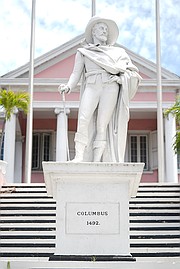
Every now and then, the conversation about the statue of Christopher Columbus starts again. It generally does not last for a long time, but people weigh in and we end up with the same sets of opinions. Some people think it should be removed from Government House while others think it should stay.

Of the people who believe it should be removed, some want it destroyed while others say it would be better to put it in a museum and provide context to make it clear he was not a hero, but a genocidal murderer. Most of the people who want it to stay seem to think it is must remain to preserve history. They view it as a harmless relic with little meaning attached and should not evoke any negative feelings.

Still others argue the statue is not the problem and suggest it is useless to get rid of it when Government House remains, the Governor General continues to represent the Queen and she is the head of state.

To be clear, the Columbus statue is not the entire problem. No one ever said it was that simple. We have, however, noted the issue of its prominent location which suggests it represents a person deserving of attention and reverence. We know this is far from the truth. It is not even accompanied by a plaque with the truth about Columbus and what he did after landing on San Salvador in 1492.

photo

We cannot assume that people know the history. It was not long ago that Columbus Day and Discovery Day were celebrated. People in their thirties and twenties were taught a completely fallacious history about the man and would know no better if not for conversations of this kind.

We know the statue of Columbus is the tip of the iceberg. Beneath the surface is colonization, slavery and racism in various forms including systemic and internalised. We have not generally been enthusiastic about these conversations either. The lack of discussion has brought us to this place, barely able to sort through the interconnected issues that demand our attention if we are to move forward and build a more inclusive, equitable nation.

There is no shortage of issues to address that are both related to the statue we can see every day and rooted in systems that are hundreds of years old and that we have learned to ignore in our daily lives. Those issues need our attention, however, they do not detract from the point being made by the people who want the statue removed. It is in an inappropriate location. It sends the wrong message. There are no sound arguments for keeping it there. We will not be banned from discussing other relevant issues if we dare to move it before we eradicate racism.

Do we care more about where we start, or starting at all?

The response to the call for the removal of the statue has not been unlike many other conversations taking place nationally. There is an enthusiastic opposition that does not necessarily disagree with the idea, but is being excessively critical of the call because they would prefer a different starting point or want the conversation to be rooted in a different area. They want to focus on a larger issue. They assume the removal of the statue is a failure to acknowledge the complication of its site.

One of the reasons it is difficult to make progress on issues like this one is the need for people to control narratives and assert themselves as superior in knowledge. It is entirely possible to support the removal of the statue while calling attention to the existence of Government House, the role of the Governor General, continued allegiance to the Queen and the cost of this useless system.

We can make plans to move the statue in two weeks and sustain conversations about why it was put there in the first place and the work that still needs to be done up to and far beyond that date. We are not limited to one statue, one conversation nor one course of action. The conversation will not end when the statue is gone if the people who care about more than the statue are dedicated to continuing it. We have to accept responsibility for our roles in this work and understand everyone is not in the same place or called to the same tasks. It is still possible to work with them and build on their actions.

The removal of statues in the US and Bristol in the UK reignited the conversation about the Christopher Columbus statue. It does not mean we are going to ignore everything and getting rid of the statue will be the end of our work. What is happening around the world is the building of momentum. It is creating a wave of actions that are inspired by those that precede it. Now is a good time to make moves.

If some of us want to talk about systemic racism in this majority black country — much to the chagrin of the people who benefit from it — and other people want to move a statue and we see the connections between the two, let’s talk about it. Note the commonalities. Support the action. Bring context to the conversation. Know that we can do both.

Let new people in and let them learn and grow

Many of the people participating in conversations about current events and underlying systems are new to them. Some are just becoming radicalised as they watch what is happening around us. Sometimes the instinct of more seasoned activists is to silence or push them out, insisting they are not ready, they will get in the way, or they are too late. It is often a protective measure. We do not want to see the work go to waste and we do not want movements to be co-opted.

Locking people out, however, is the result of leading with fear. It may be completely reasonable to have concerns about people’s intentions, especially when they come to a cause like Black liberation at a time like this, but we always need more people. Those of us who have been here before have the responsibility to help newcomers to learn, practice, correct mistakes, be open to new information, share ideas and bring more people. We cannot do it alone.

There has to be space in movements for newcomers and that space has to be actively created. We can easily pinpoint organisations with leaders who have refused, over many years, to train other people for leadership and ensure the continuity of the work.

The newcomers do not need to immediately become leaders, but they need to be welcomed and have a place to learn, work and grow. They need to have access to information, be connected with supporters, get experience with the media, know how to plan events, and understand the history and the trajectory of the movement.

It all starts with letting them in. They may come late, they may come full of emotion, they may come with more passion than know-how and they may come with ideas counter to what has already been decided, but they come. They come with much-needed energy. Let them in, let them see, let them do.

One day, the leaders we know now will be gone and there will still be work to do. There will be progress and there will be successors if we understood movements need more people.

Published by The Tribune on June 17, 2020.

In last week’s discussion on racism and injustice, we took a look at some of the responses to the Black Lives Matter protests in the U.S. and thought critically about their usefulness. When is an action or response appropriate, and when it is inappropriate? Which actions are we uncertain about? What lessons can we learn from failed responses and successful responses? Check out the video, varied thoughts about specific actions, and ways to assess our idea before we take action.

In the coming weeks, I will be hosting a discussion series with young people in the Queen’s Commonwealth Trust (QCT) network about the Black Lives Matter movement in the U.S., racism and injustice in Commonwealth countries, solidarity, allyship, and the work to eradicate racism. These conversations are often difficult to have, but they are necessary, and there is a lot for us to learn from each other. In this first conversation, Izzy, Mike, and I ask broad questions to give us a sense of how everyone is feeling, what people are thinking about, and which topics we need to focus on exploring in upcoming sessions.
